

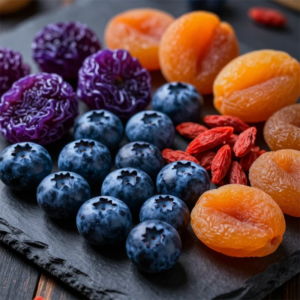

Leveraging Flavor Profiles: Berries vs. Apricots
The key to using dried fruit effectively is understanding the distinct flavor contribution of each type.
Dried Berries: The Acidity and Tartness Agents
Dried berries (Cranberries, Blueberries, Cherries) excel when you need a balancing agent in rich or heavy dishes.
- Cranberries: Their high acidity cuts through fat. They are perfect partners for rich meats like duck or pork, acting similarly to a fruit-based glaze or reduction.
- Blueberries & Cherries: Offer a deeper, wine-like sweetness. They shine in baking applications where their color remains relatively stable and their chewiness adds textural contrast.
Dried Apricots: The Sweet and Earthy Bridge
Apricots bring a different dynamic, often bridging the gap between sweet and savory with an earthy undertone.
- The Tangy Base: Their moderate tartness makes them ideal for slow-cooked stews and tagines (particularly Moroccan cuisine), where they soften beautifully, releasing subtle sweetness into the broth.
- Pairing Agents: They pair exceptionally well with spices like saffron, ginger, and cinnamon, making them excellent additions to rice pilafs or couscous.
Savory Sensations: Integrating Dried Fruit into Main Dishes
The most exciting culinary application often lies in the savory realm, where dried fruits provide depth that fresh fruit cannot match.
Building Flavorful Marinades and Rubs
Dried fruit acts as a natural tenderizer and flavor enhancer in marinades.
- Apricot-Ginger Marinade for Poultry: Rehydrate chopped dried apricots in hot water or orange juice. Blend them with fresh ginger, soy sauce, and garlic. The natural sugars caramelize beautifully on grilled chicken or tofu, forming a sticky, flavorful crust.
- Cherry-Balsamic Glaze: Reduce dried cherries with balsamic vinegar and a touch of honey. This creates a thick, complex glaze perfect for brushing onto steak or lamb chops during the last few minutes of cooking.
Elevating Grains and Salads
Dried fruits are crucial for textural balance in grain-based dishes.
- Textural Contrast in Pilafs: Fold finely chopped dried apricots and toasted pine nuts into warm farro or quinoa. The heat slightly softens the apricots, infusing the grain with flavor.
- Powerhouse Salads: Instead of standard raisins, use dried blueberries in kale or spinach salads. Their intense color contrasts beautifully with dark greens, and their slight chew stands up well to hearty vinaigrettes. Tip: Lightly toast dried berries before adding them to maximize their crunch.
Stuffing and Pâtés
Dried fruits add essential moisture and complexity to traditional stuffings for poultry or pork loin. The slow cooking process allows their flavor to fully permeate the bread base, counteracting the richness of the meat.
Baking Beyond Cookies: Sophisticated Dessert Applications
While muffins are common, dried berries and apricots deserve roles in more sophisticated baked goods.
Dried Fruit in Pastry Creams and Compotes
- Compotes as Fillings: Create intensely flavored compotes by simmering chopped dried apricots with orange zest and a splash of brandy. Use this thick mixture as a filling for layered cakes, tarts, or even inside croissants before baking.
- Infused Crèmes Pâtissière: Steep dried blueberries in the milk used to make pastry cream. This imparts a subtle, natural purple hue and a complex berry note to vanilla-based fillings.
Flavor Swirls in Cheesecakes and Quick Breads
For cheesecakes, create a thick jam from dried tart cherries. Swirl this mixture into the batter before baking. The intense tartness perfectly cuts through the richness of the cream cheese. For quick breads, replace a portion of fresh fruit with rehydrated dried apricots for a denser, moister final product.
Beverages and Infusions: Beyond the Plate
Dried fruits are fantastic flavor enhancers for liquids, adding natural sweetness and color without artificial syrups.
Homemade Syrups and Tea Infusions
- Apricot Syrup: Simmer dried apricots with sugar and water until dissolved. Strain the mixture to create a rich syrup perfect for flavoring sparkling water, cocktails, or drizzling over pancakes.
- Herbal Tea Blends: Dried cranberries and cherries are excellent additions to black or green tea blends. They release their flavor slowly during steeping, creating naturally sweet, warming infusions, especially effective when combined with hibiscus.
Conclusion: Mastering the Art of Dried Fruit Integration
Dried berries and apricots are far more versatile than their reputation suggests. By recognizing their concentrated acidity, natural sweetness, and textural contributions, you can elevate everyday dishes. Whether balancing a rich marinade with the tang of cranberry or adding earthy sweetness to a savory pilaf with apricot, remember that these simple pantry items are powerful tools for flavor complexity. Stop snacking them—start cooking with them!